Four floors, four kinds of age.
Every surface we carry was already old when we found it. These four collections cover the flooring we source most often at Ancient Surfaces: reclaimed Arcane stone, millennial limestone planks, antique cement tiles and salvaged cobblestone. Each one comes out of a real building, a real street or a real workshop, and each one brings a different kind of history into the room.
Arcane Stone
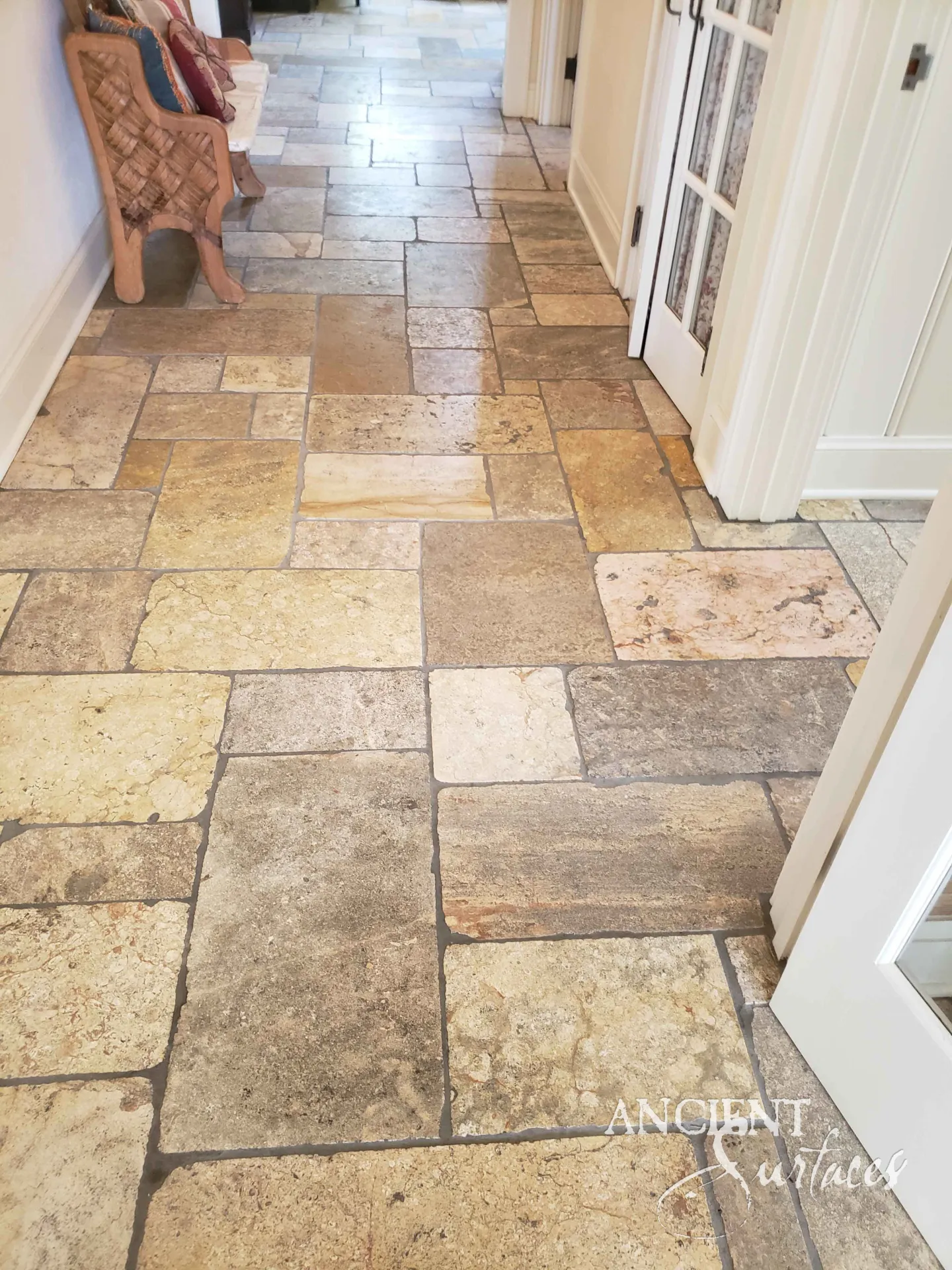
Our Arcane collection gathers reclaimed antique stone flooring lifted from European estates, monasteries and country houses that stood for centuries before we ever saw them. Every slab arrives already finished by use, with the soft sheen that only generations of footsteps can leave behind.
- Origin
- Reclaimed European estates, abbeys and farmhouses
- Finish
- Original worn surface, hand cleaned, calibrated underside
- Where it is used
- Entry halls and grand foyers
- Living rooms and libraries
- Kitchens and butler pantries
- Chapels, hotels and private clubs
- Radiant heated interiors
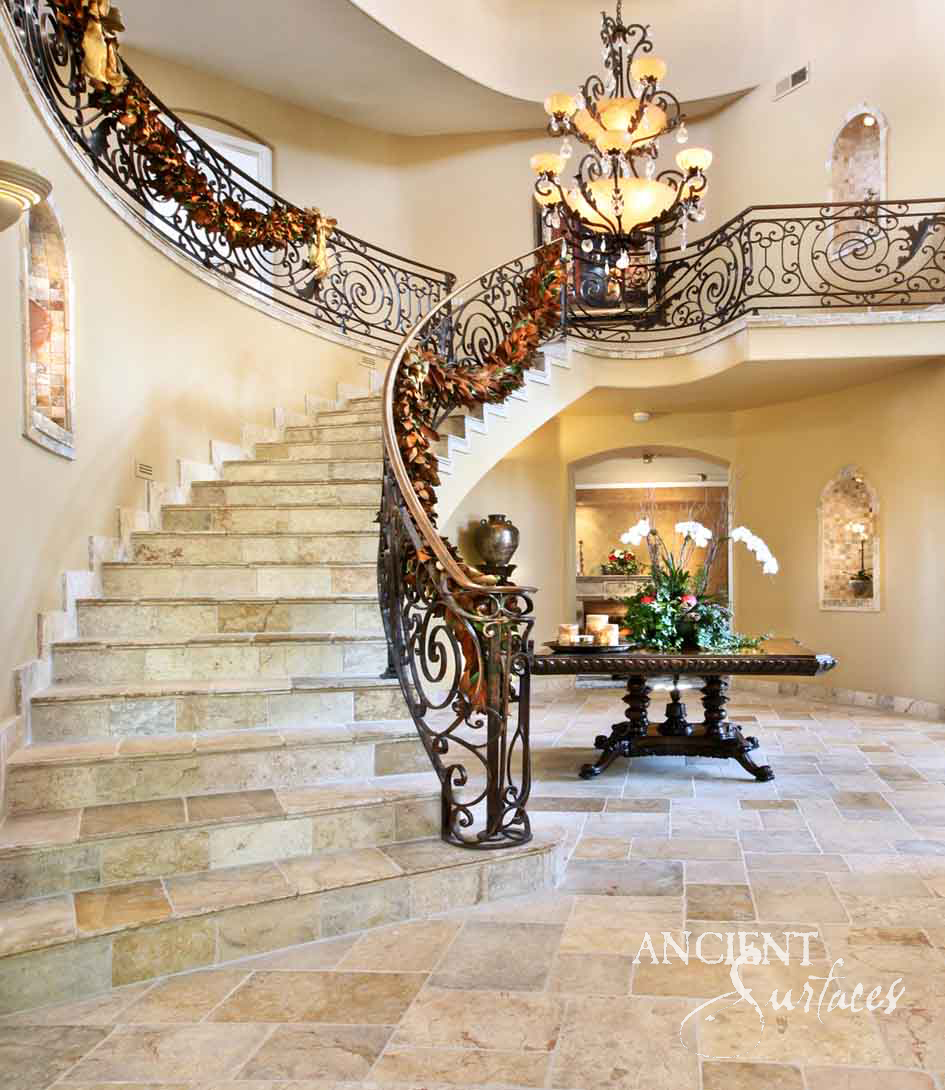
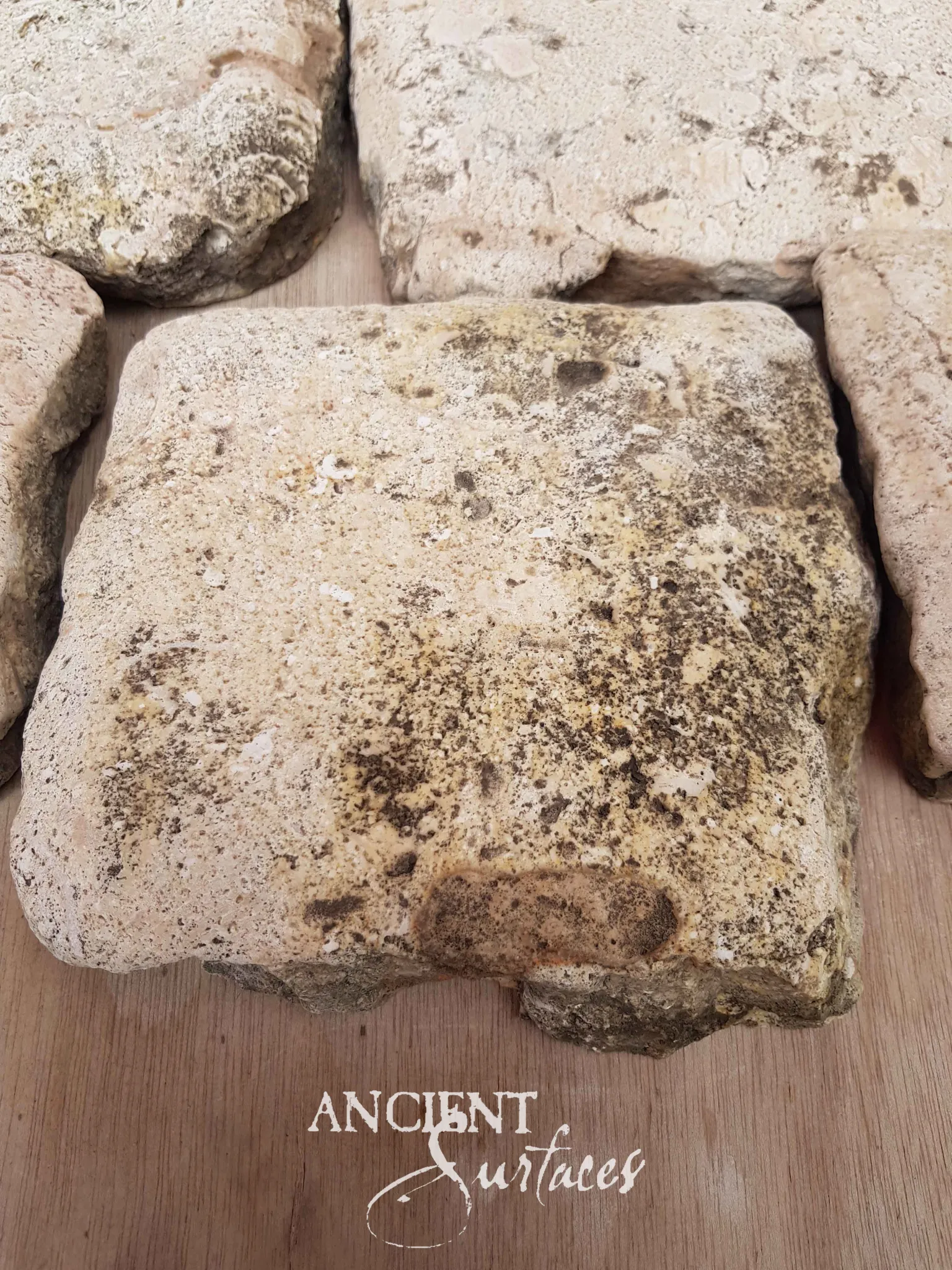
Arcane stone is salvaged rather than manufactured, so no two pieces repeat. Some slabs carry the faint cupping of a doorway that saw daily traffic since the 1600s. Others show the pale veining and mineral shadows of the quarry they came from. We clean each piece by hand, keep the original wear intact, and calibrate only the underside so the floor sets level on a modern subfloor without losing a single year of its history.
Because this is dense, close grained antique limestone, it performs far better than its age suggests. It takes radiant heat beautifully, holds a cool touch through a Miami or Dubai summer, and stands up to the kind of daily life that would ruin a softer engineered product. Designers reach for Arcane when a new build needs to feel settled the day the client walks in, and when a genuine restoration cannot tolerate a reproduction.
The colour range runs from bone and oatmeal through warm greige and smoke, which lets Arcane sit comfortably beside white oak, lime plaster, blackened steel and unlacquered brass. It reads quiet in a minimalist interior and reads rich in a traditional one, which is why it turns up as often in a modern gallery wing as in a restored chateau.
Limestone Planks
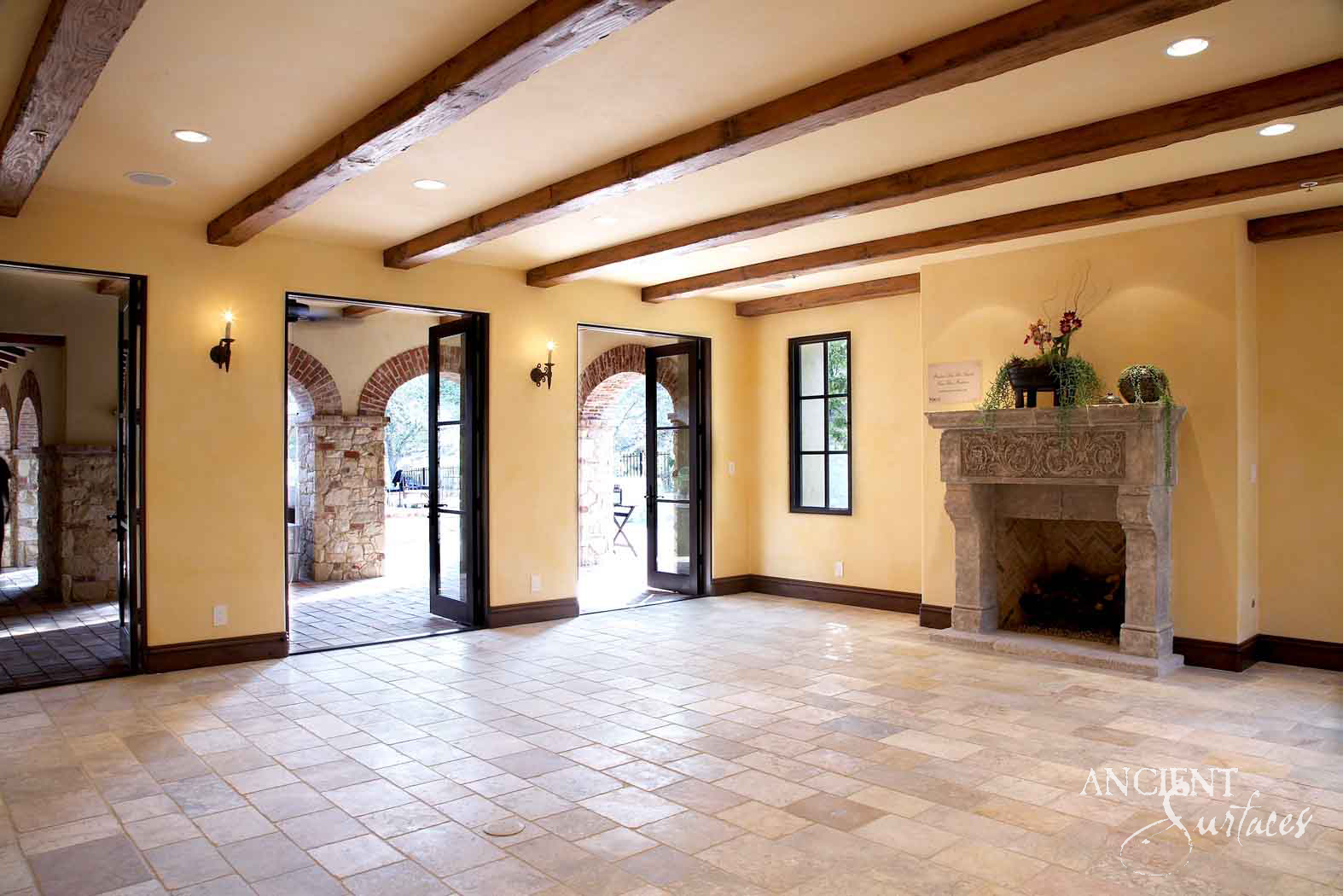
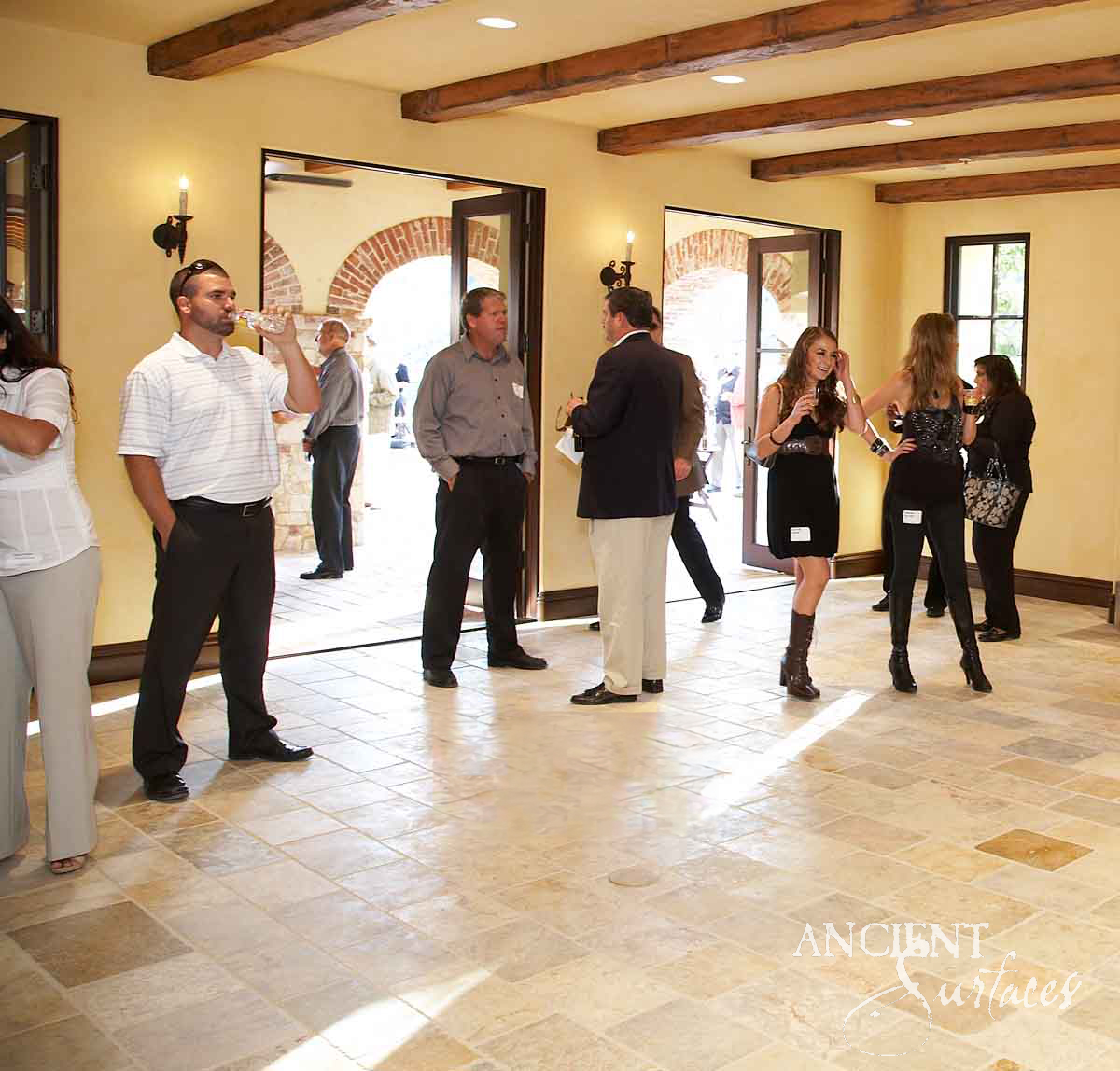
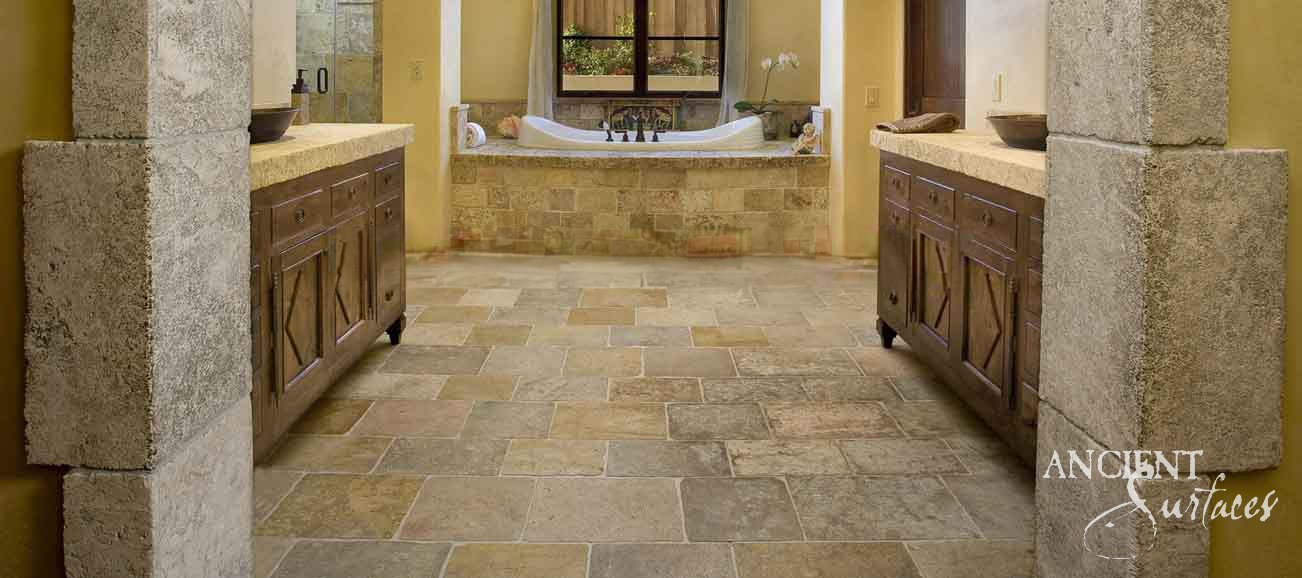
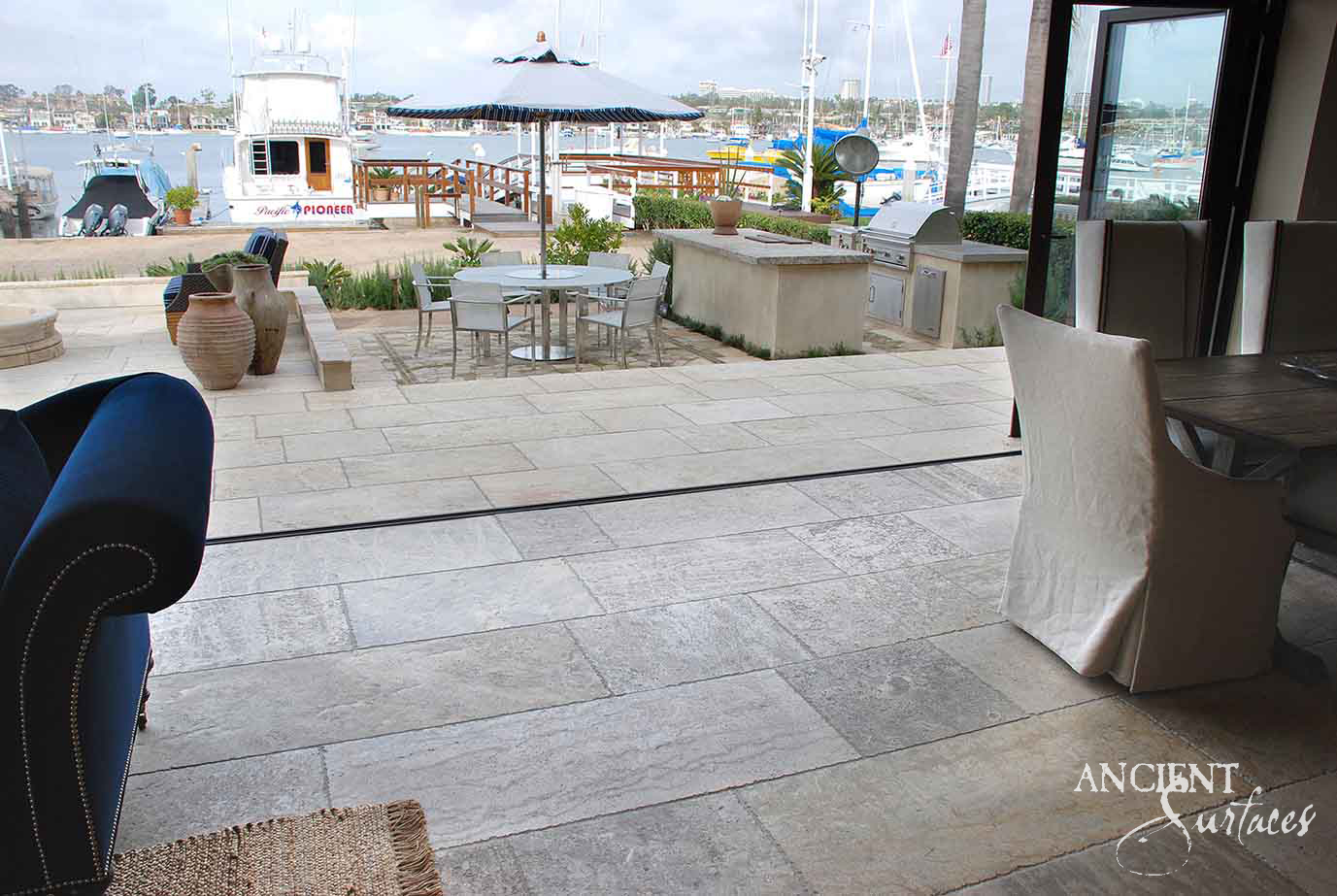
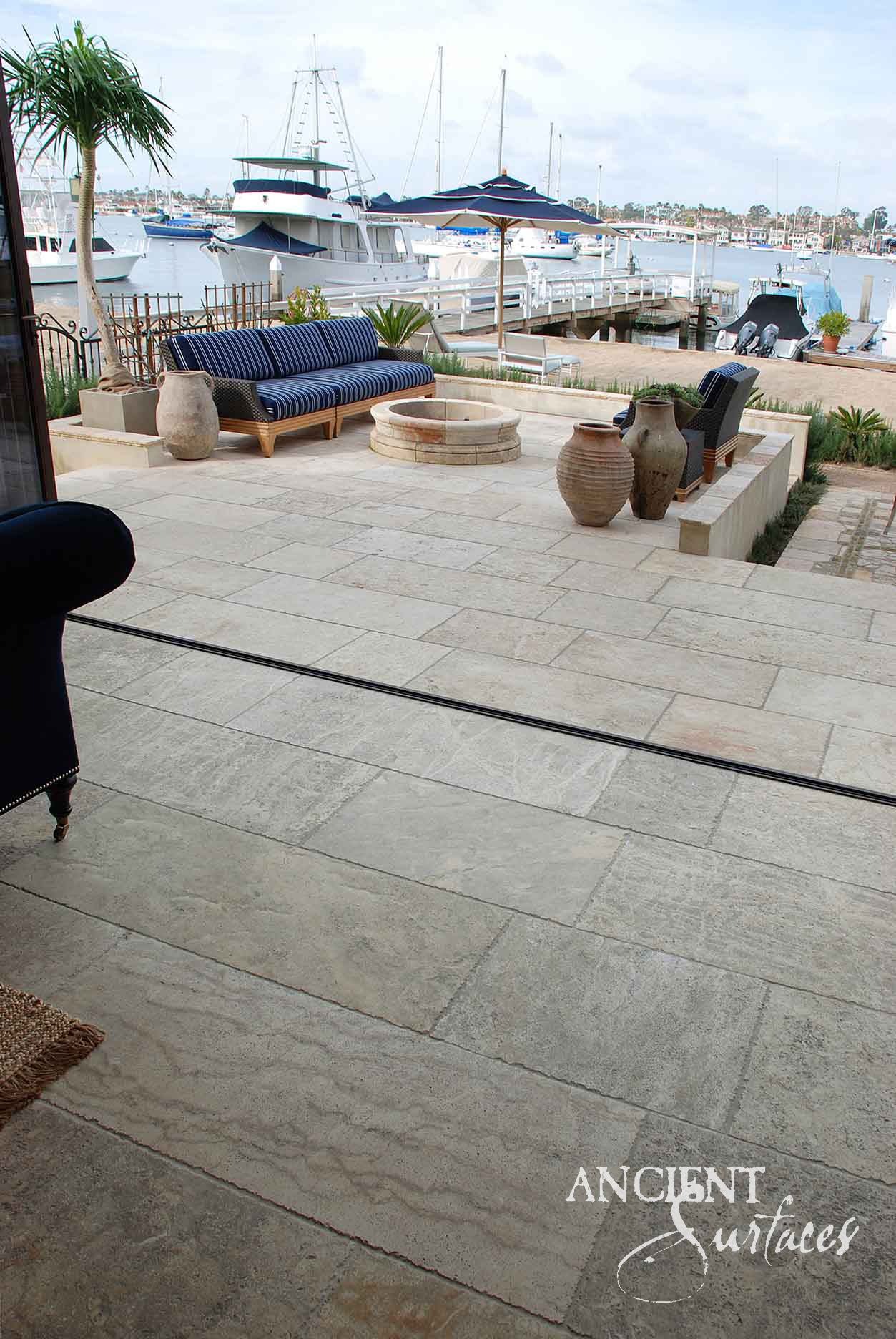
Plank is what happens when antique limestone is cut long and lean instead of square. These are reclaimed millennial limestone planks, milled into elongated formats that stretch a room the way a wide board timber floor does, but in solid stone that will outlive the house around it.
- Origin
- Reclaimed millennial limestone, Mediterranean sources
- Finish
- Honed or lightly brushed, aged edges, long plank format
- Where it is used
- Open plan living and dining rooms
- Long corridors and gallery halls
- Primary suites and dressing rooms
- Spas, wet rooms and pool decks
- Indoor to outdoor transitions
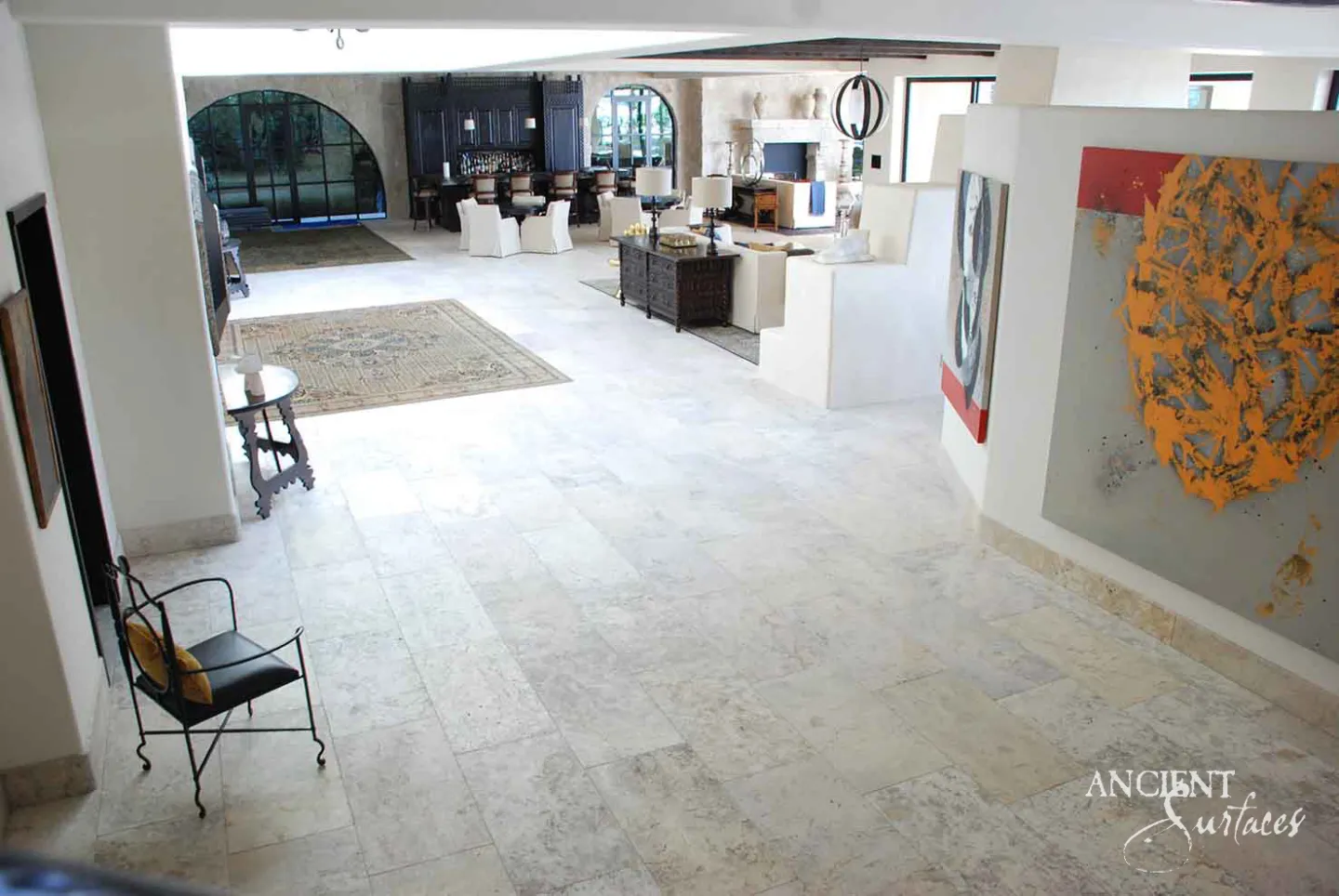
The stone itself has been forming for millions of years and has been in service for hundreds. We source it from old structures and quarry beds across the Mediterranean, then cut it into long planks in widths that can run consistent for a formal room or random for something more relaxed. Laid in a running bond, the format pulls the eye down the length of a hallway and makes a modest footprint feel considerably larger.
Plank flooring is the collection clients choose when they want the warmth and honesty of antique stone without the busy rhythm of small tile. The joints almost disappear once the floor is grouted tight, so what you see is a continuous field of natural colour with fossil traces, shell fragments and mineral drift running through it. Each plank is a genuine geological record, not a printed imitation of one.
It is dense enough for high traffic and stable enough for large open plan spaces, and it can be honed for a soft matte surface or brushed for a little more grip underfoot. That makes it a practical answer for wet zones, pool surrounds and spa floors as well as for the living areas it is best known for.
Cement Tiles
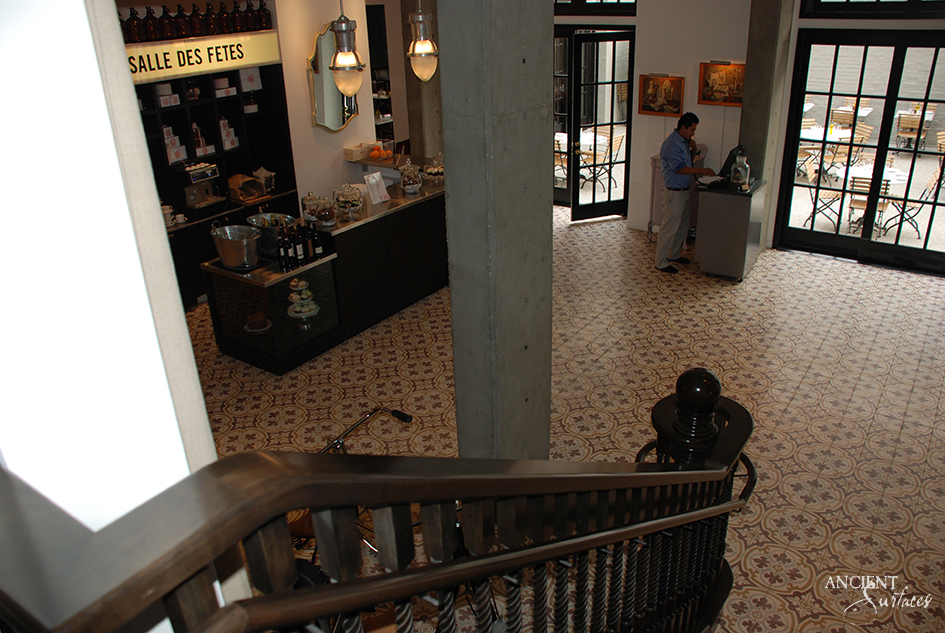
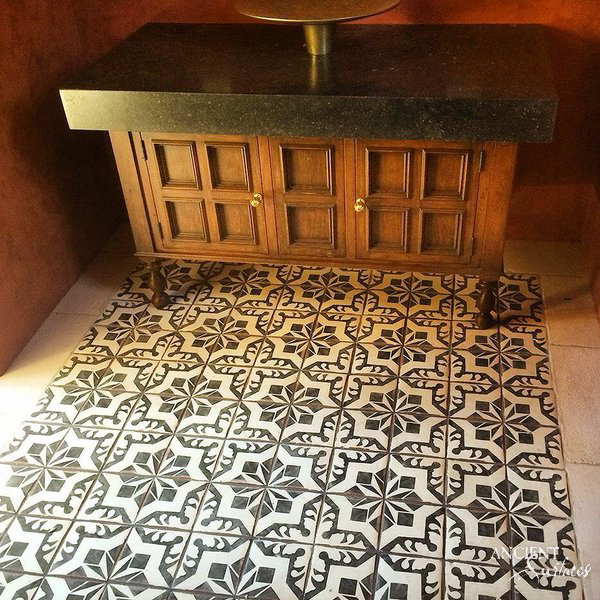
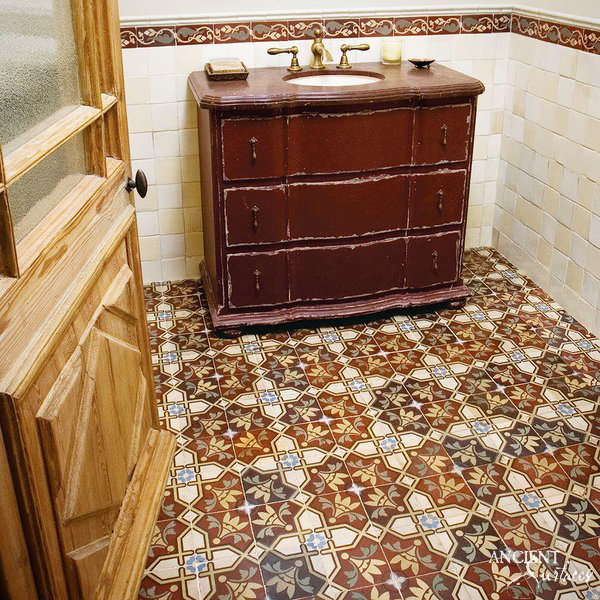
Antique cement tiles are the most graphic surface we carry. Hand pressed a century or more ago in workshops across France, Spain, Morocco and Cuba, each tile was poured pigment by pigment into a brass mould, which is why the patterns still hold their colour so deeply today.
- Origin
- Salvaged French, Spanish, Moroccan and Cuban workshops
- Finish
- Original pigment layer, naturally worn matte surface
- Where it is used
- Entry vestibules and powder rooms
- Kitchens, pantries and bar floors
- Courtyards and covered loggias
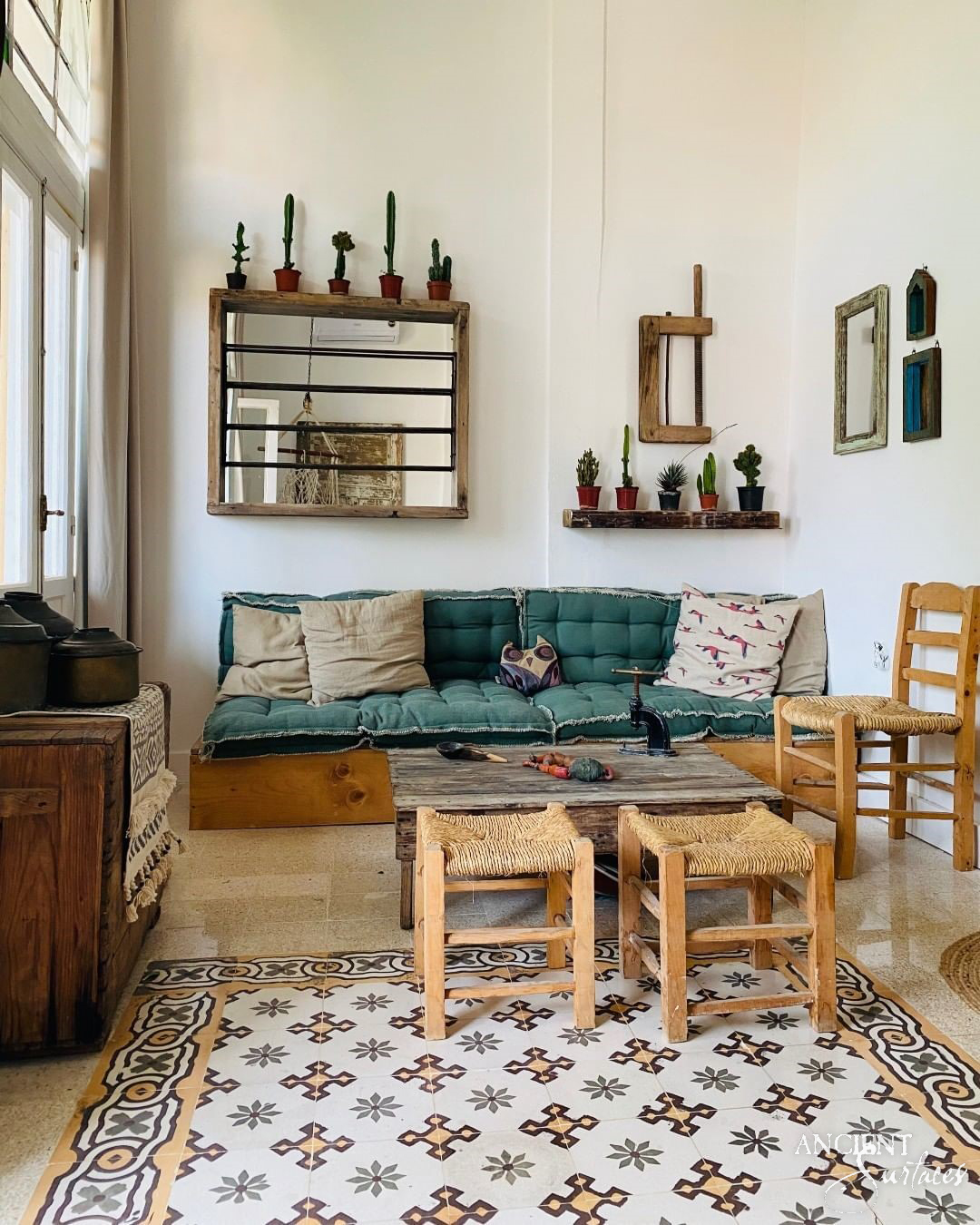
- Feature carpets set inside stone floors
- Backsplashes and fireplace surrounds
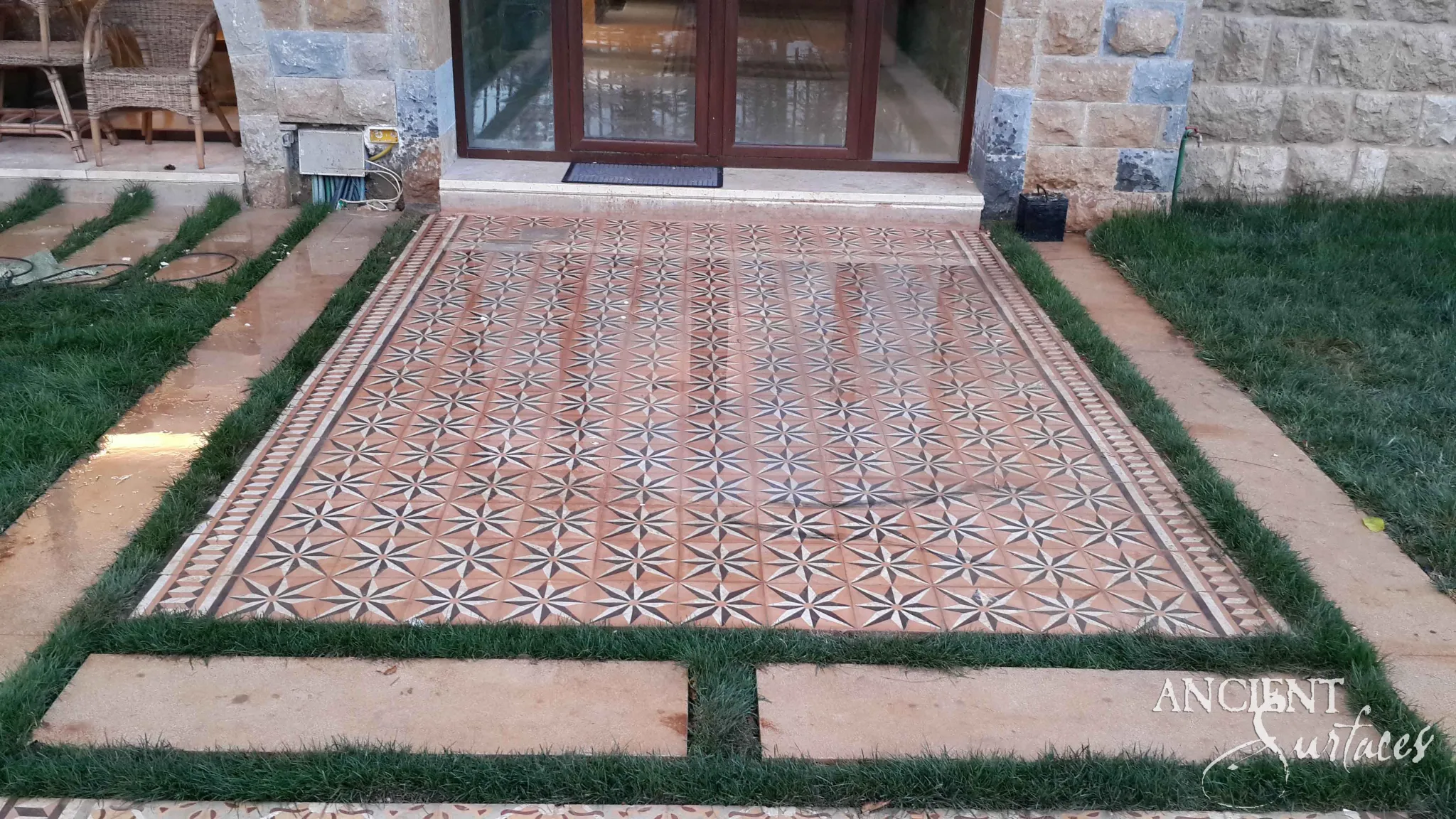
These are encaustic tiles in the true sense. The design is not printed on top, it is built into a thick layer of coloured cement that runs several millimetres into the body of the tile. A hundred years of scrubbing takes the shine off the surface and softens the edges, but the pattern itself stays exactly where it started. That is the whole reason antique cement tile survives in old kitchens and cafés long after everything around it has been replaced twice.
We salvage them in complete floors wherever possible, so you inherit the field tile, the border runs and the corner pieces together as one coherent scheme. Geometric stars, interlocking ribbons, faded florals and quiet solids all show up in the collection, in palettes that have mellowed into something no factory can match on the first day.
Designers use them where a floor should do the talking. A powder room, an entry vestibule, a kitchen, a courtyard, or a single framed carpet of pattern set inside a plain stone floor. They work equally well as a wall surface behind a range or around a fireplace, and they pair especially well with our limestone, which gives the eye somewhere calm to rest.
Cobblestone
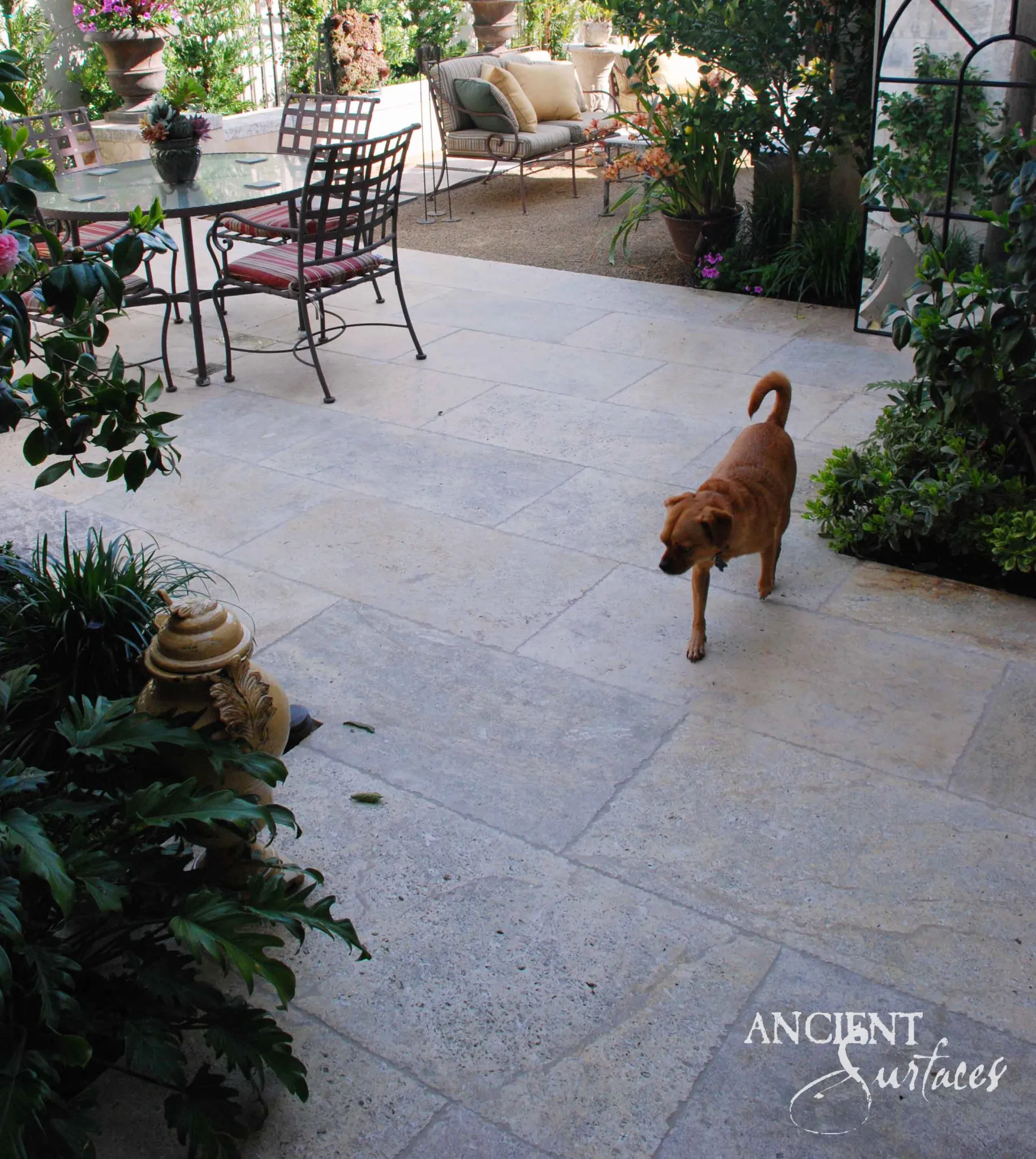
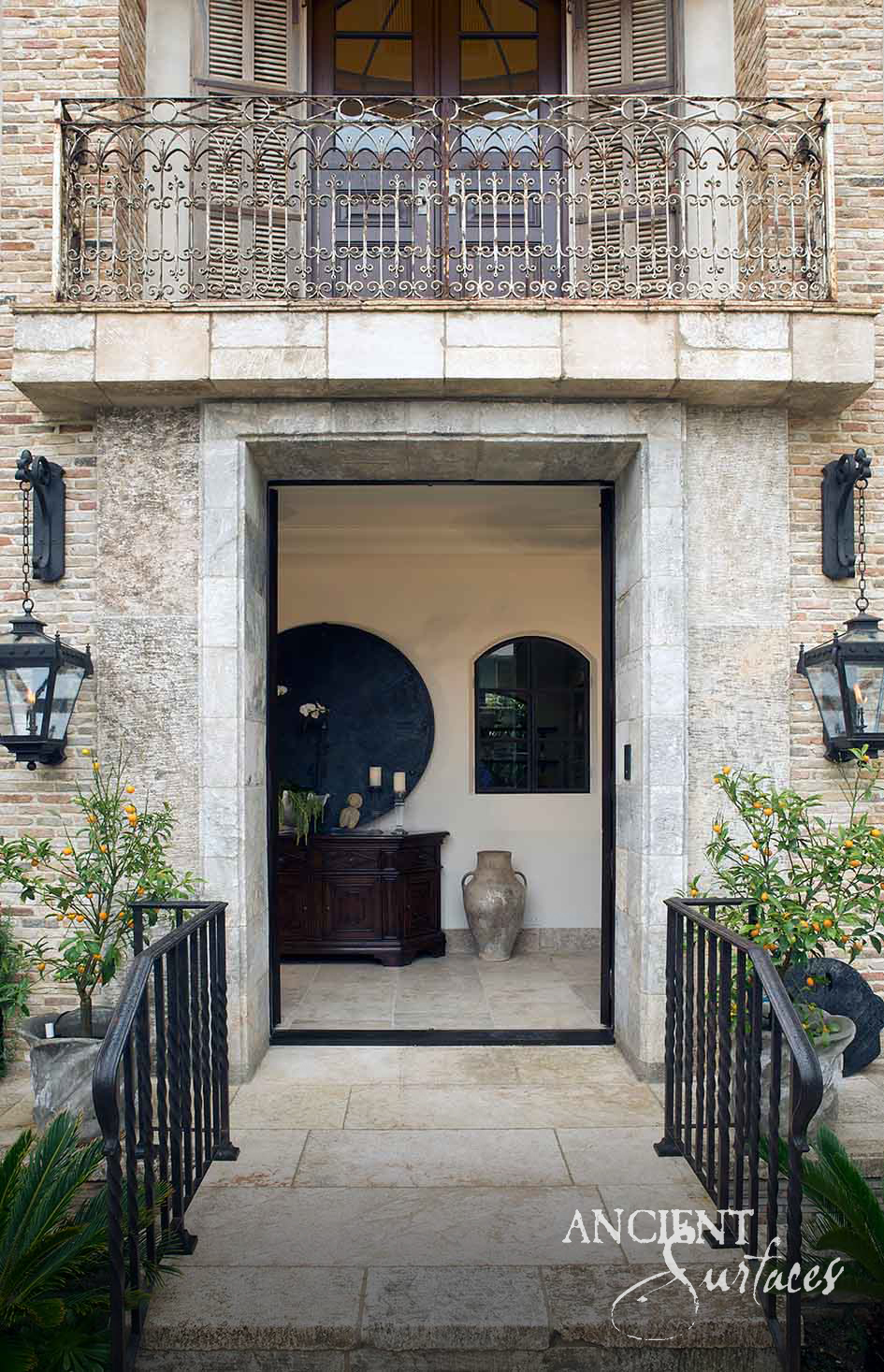
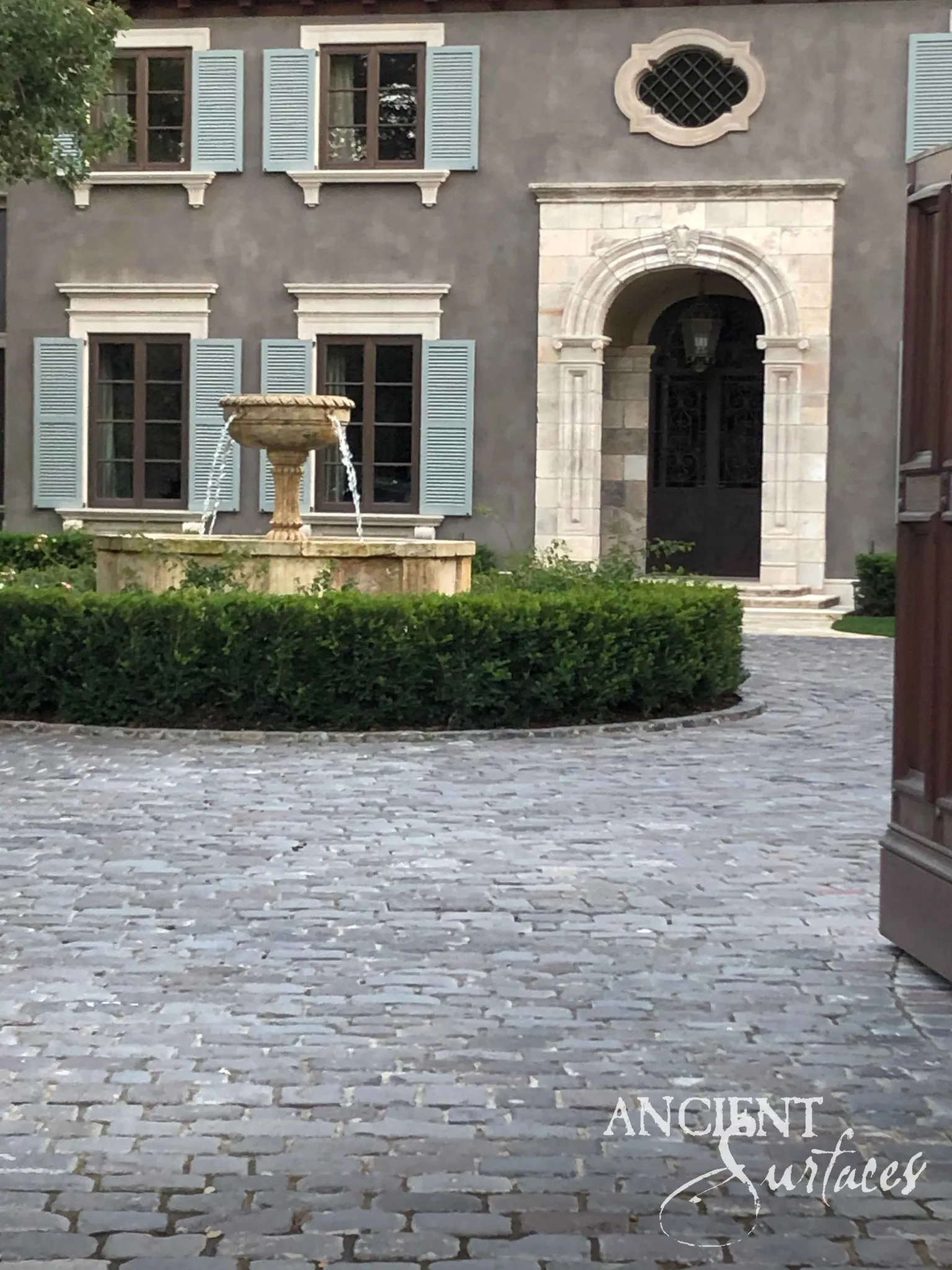
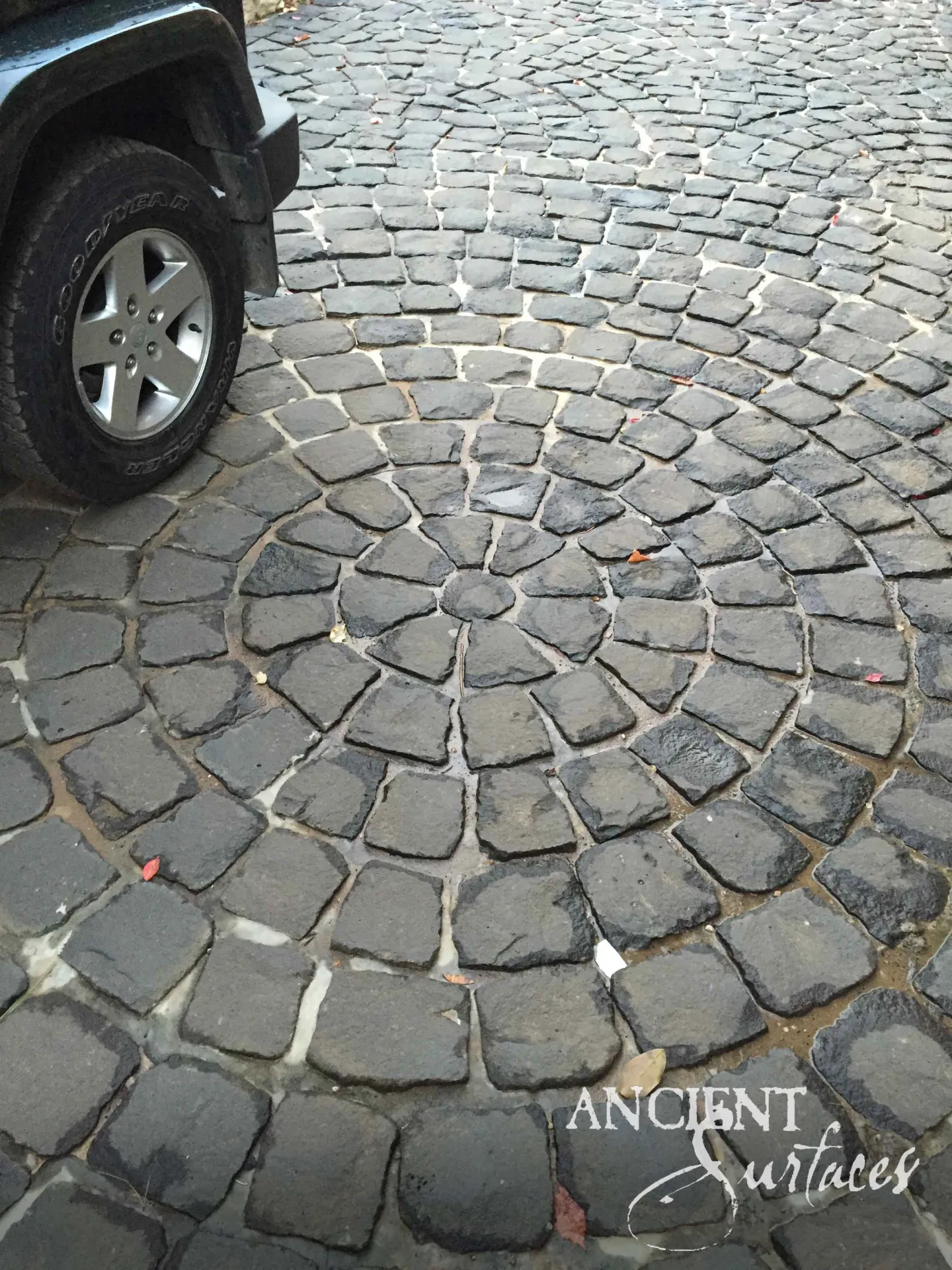
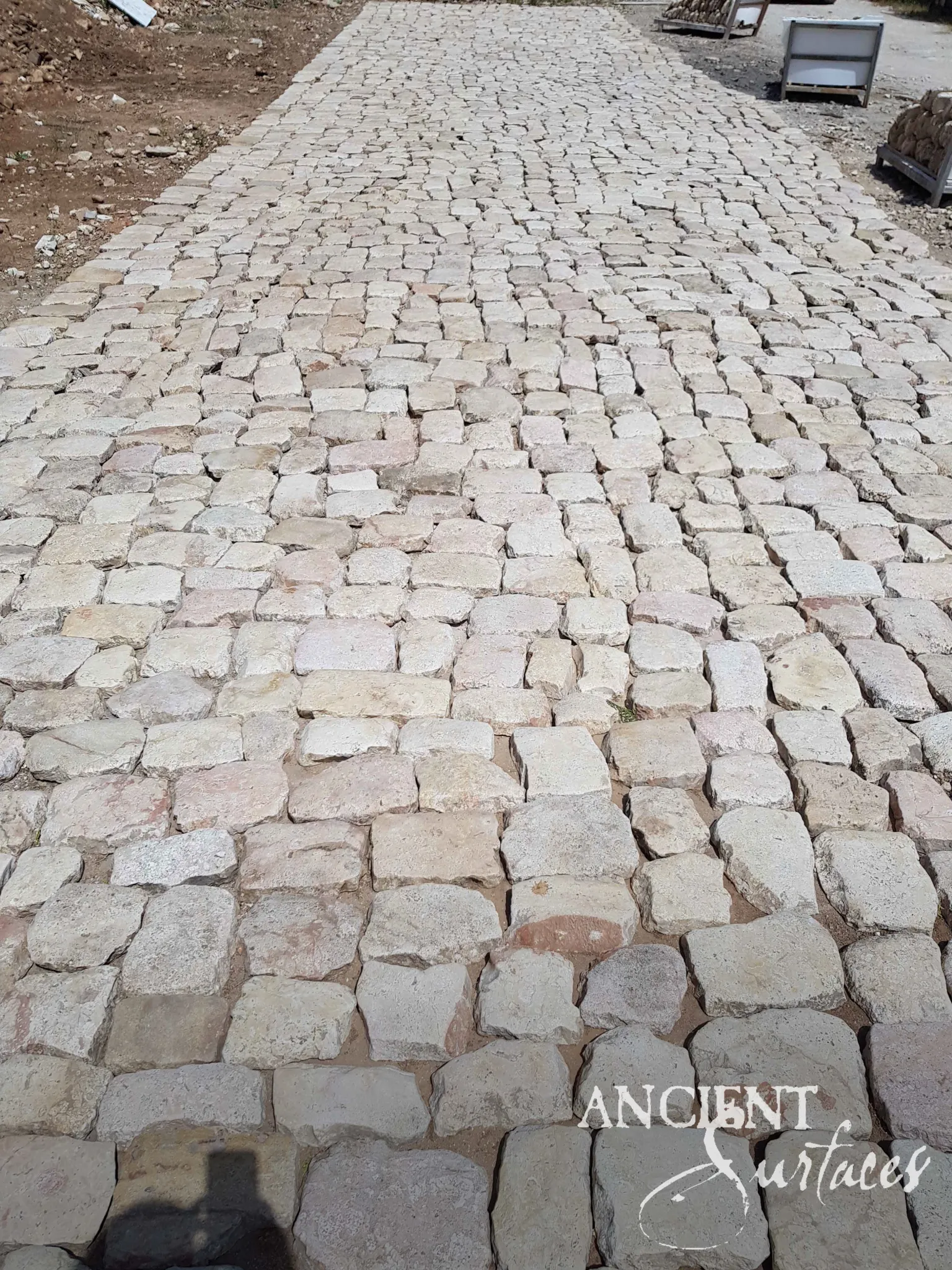
Reclaimed cobblestones are the toughest thing we sell and arguably the most romantic. Pulled from old European streets, market squares and carriage yards, these limestone and basalt setts already carry the rounded tops and polished faces that only decades of cart wheels and weather can produce.
- Origin
- Reclaimed European streets, squares and carriage yards
- Finish
- Naturally worn tops, available sawn or split, basalt and limestone
- Where it is used
- Driveways, motor courts and estate entries
- Garden paths and terraces
- Pool surrounds and outdoor kitchens
- Borders, edging and drainage bands
- Interior mud rooms and wine cellars
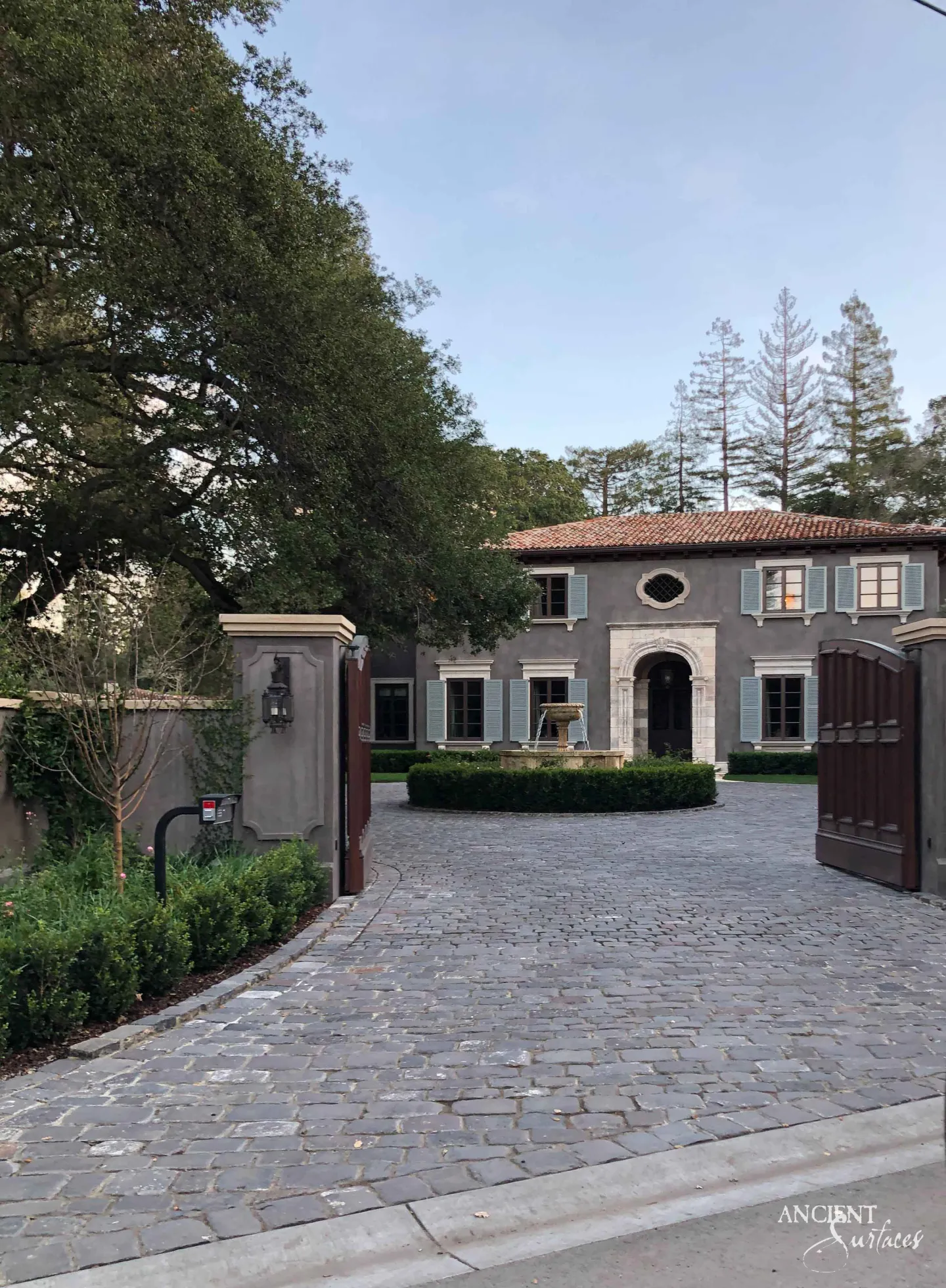
Basalt cobbles are dark, dense and almost impervious, which is why they were chosen for the busiest streets in the first place. Limestone cobbles are lighter and warmer, ranging through cream, honey and pale grey, and they age with a gentler patina. We stock both because most projects want the contrast, whether that means a basalt border framing a limestone field or a soft fan pattern that shifts tone as it runs.
Laid on a proper bed, antique cobblestone is close to permanent. It handles vehicle loads, freeze and thaw cycles, salt air and pooling water without complaint, which makes it the natural choice for driveways, motor courts and estate entries. Set on a tighter joint with a sawn top, the same stone becomes comfortable enough underfoot for a garden path, a pool surround or an interior mud room.
What no new product can replicate is the surface. A freshly cut cobble looks cut. These have been walked on since long before anyone thought to photograph them, and the moment they land on a site the landscape reads as though it has been there for generations.
Not sure which floor belongs in your project?
Send us the plans, the light, and a sense of how the room will be lived in. We will tell you honestly which of these four holds up best, and we will send samples so you can see the stone before you commit to it.